
Toys are a normal part of family life, but they can easily take over the living room, bedroom, and play area. The good news is that a small home can still stay organized with the right storage system.
The best toy storage ideas are not only about looking tidy—they should also help children find toys easily and put them back independently. Here are eight practical ideas that work well for small spaces.
1. Use Hanging Organizers for Flat Toys
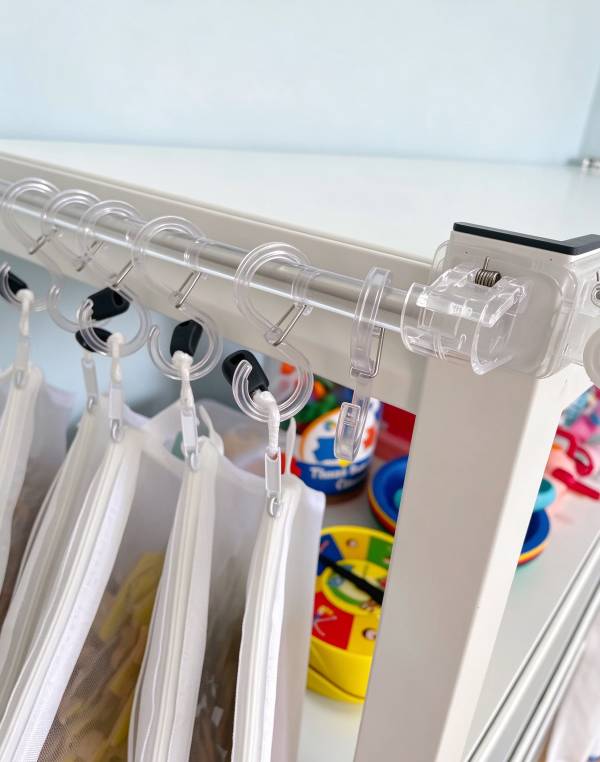
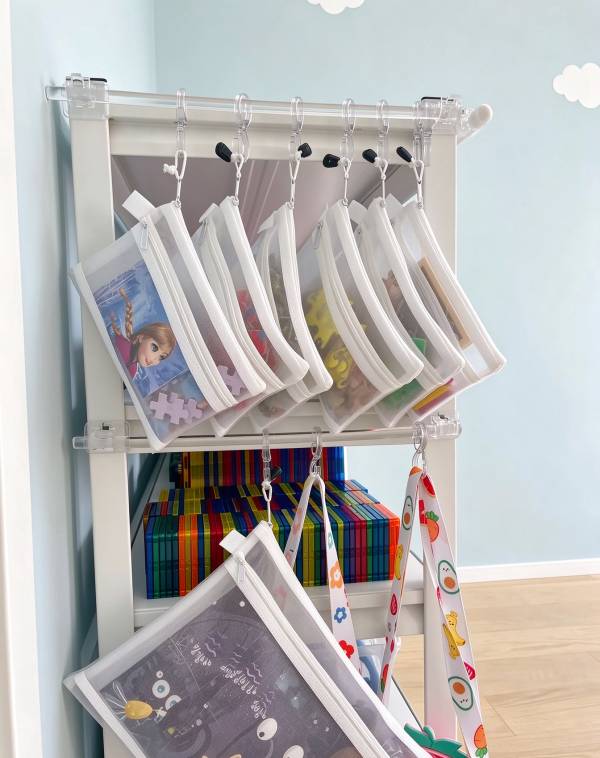
Flat toys, puzzle pieces, card games, and activity sheets often get lost inside drawers. A hanging organizer with clear pockets solves this problem by keeping everything visible and easy to take out.
This type of storage works especially well for:
Puzzles
Flashcards
Activity books
Card games
Small craft sets
Clear pockets let children see what is inside without opening every box. It also makes cleanup faster because each item has a fixed place.
2. Store Puzzles in Individual Bags
Puzzles are difficult to store because the box is often bulky, while the pieces can be small and easy to lose. Putting each puzzle into a separate transparent bag helps keep pieces together and saves shelf space.
You can label each bag with the puzzle name or number of pieces. This makes it much easier for children to choose a puzzle and put it back correctly.
3. Keep Small Toys in Separate Boxes
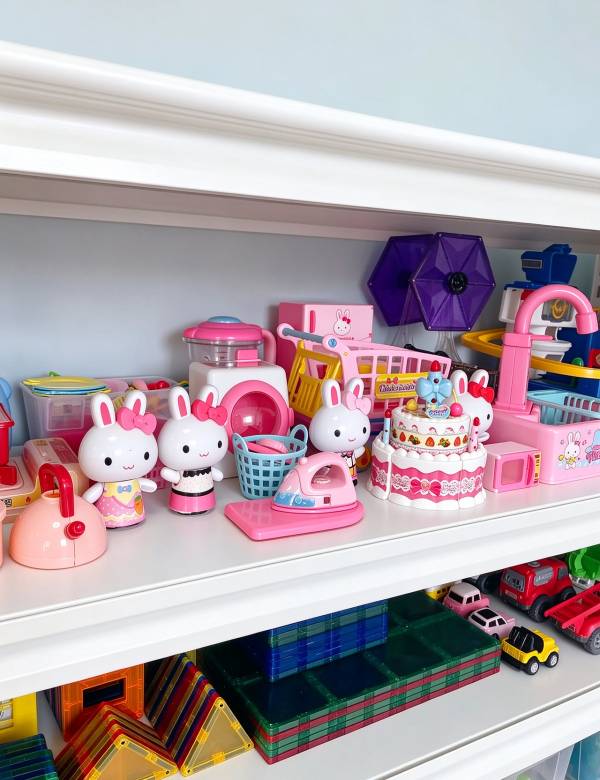
Small toys such as figures, vehicles, building blocks, and pretend-play items need category-based storage. When they are mixed together, cleanup becomes frustrating and many pieces get lost.
Sort them into simple groups:
Small figures
Cars and vehicles
Building blocks
Pretend-play toys
Special parts or accessories
Using small open boxes helps children see each category clearly. It also teaches them to develop organized play habits.
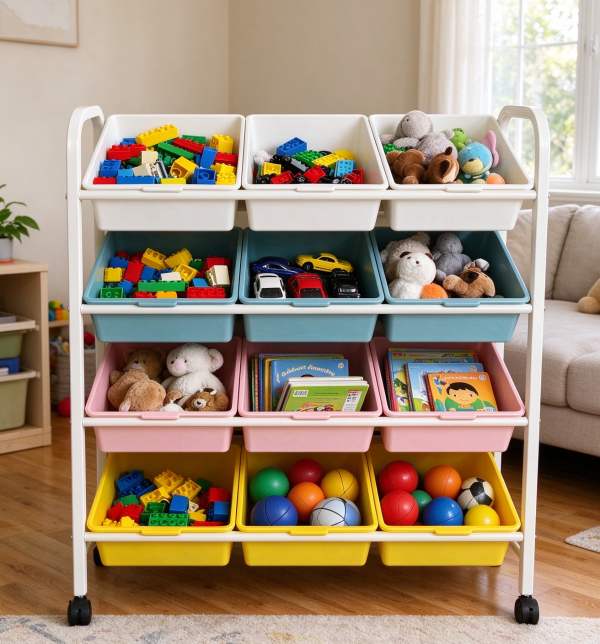
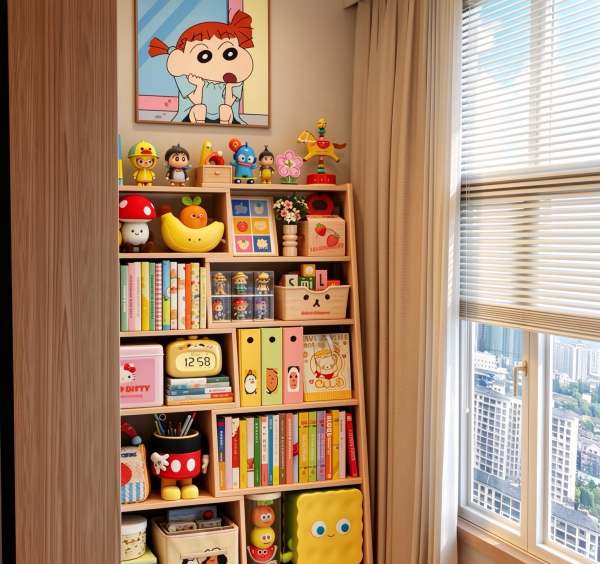
4. Create a Full Toy Storage Station
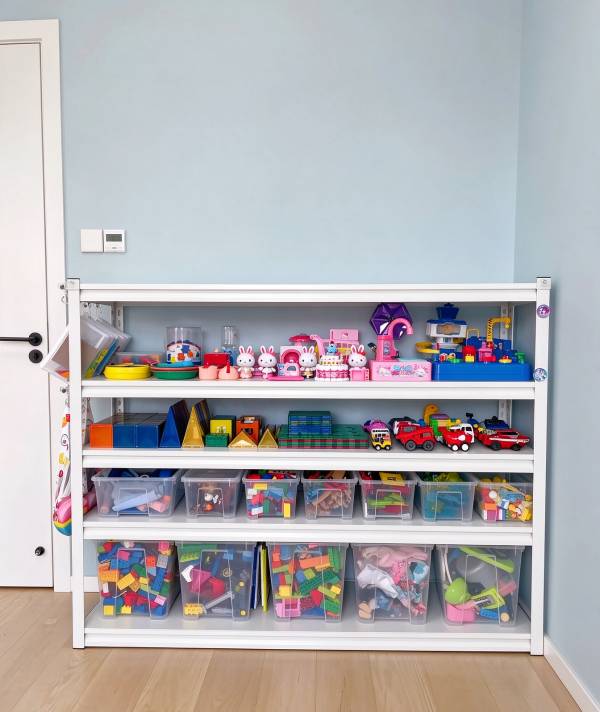
A dedicated toy storage station is one of the most effective solutions for small homes. Instead of spreading toys across different rooms, keep them in one central place.
A good toy station should include:
Open shelves for frequently used toys
Closed boxes for small pieces
Lower shelves for easy child access
Higher shelves for less often used items
A simple labeling system
When everything is stored in one place, it becomes easier for both parents and children to manage daily cleanup.
5. Use Vertical Space for Magnetic Toys
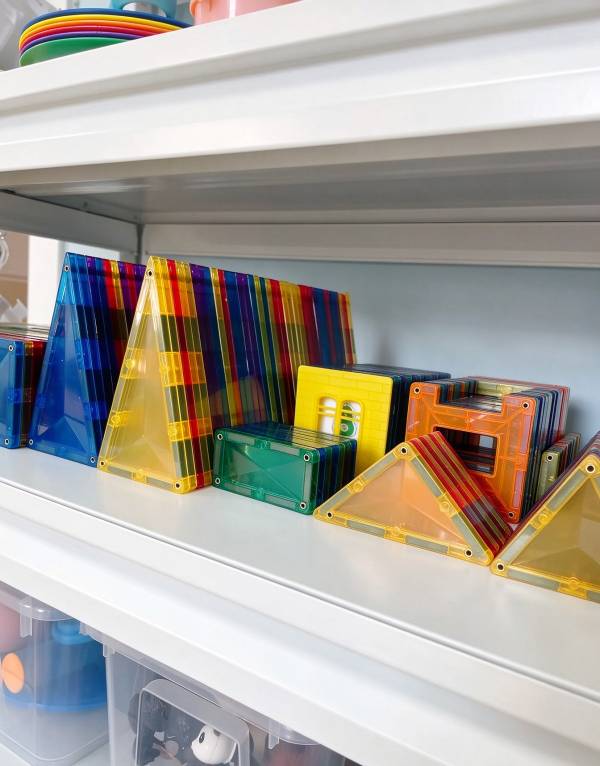
Magnetic tiles and building toys are popular, but they can quickly become messy if they are stacked randomly. Storing them upright in separate sections makes them easier to see, choose, and put away.
You can organize them by:
Color
Shape
Size
Play type
Frequency of use
Vertical storage also protects thin pieces from being crushed under heavy boxes. It is especially useful for children who like to build different structures every day.
6. Hide Clutter with a Simple Curtain
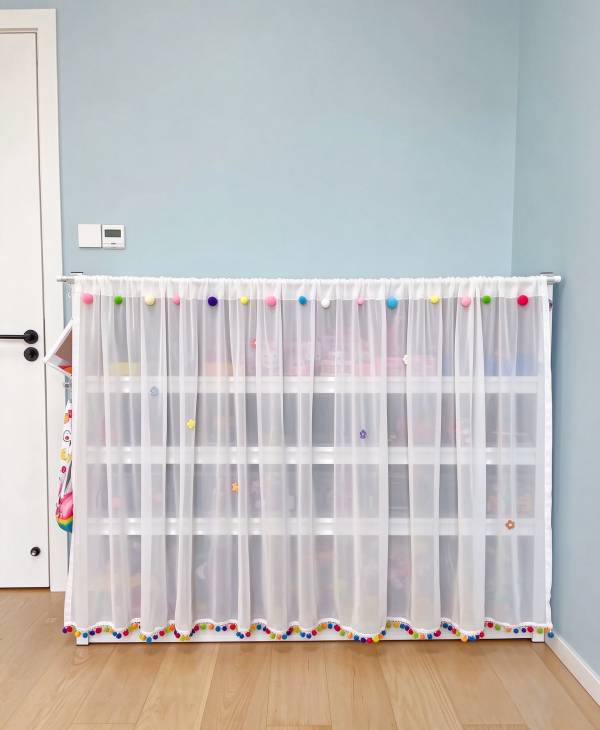
Even organized toy shelves can look busy when there are many colorful boxes. A simple curtain is an affordable way to create a cleaner look while keeping everything easily accessible.
This idea works well if the toy shelf is placed in:
The living room
The playroom
A child’s bedroom
A shared family area
A white or light-colored curtain keeps the space feeling calm. You can also add small colorful details to match the room’s style.
7. Use Different Box Sizes for Flexible Storage
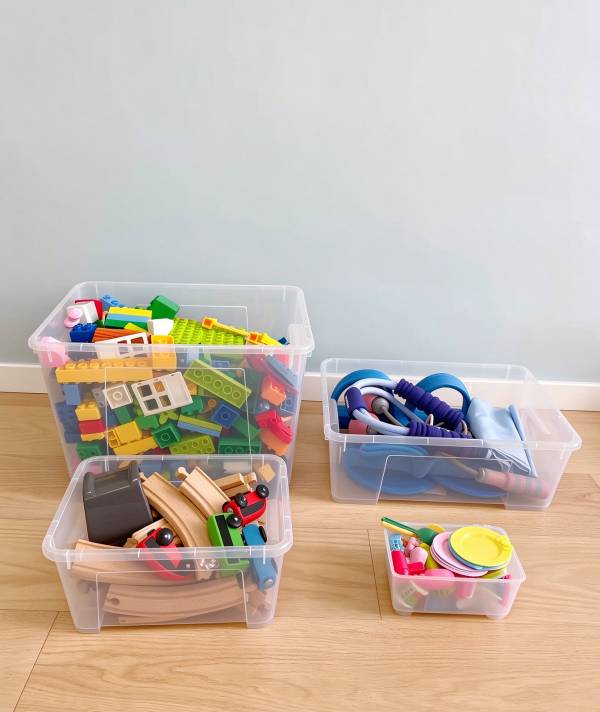
Not all toys are the same size, so using only one type of storage box usually does not work well. A set of different box sizes allows you to match the container to the toy.
For example:
Large boxes for big building sets
Medium boxes for vehicles and figures
Small boxes for tiny parts and accessories
Long boxes for puzzles or flat games
Transparent boxes are very practical because you can see the contents without opening them. They also help create a uniform look on the shelf.
8. Combine Open Shelves with Hanging Storage
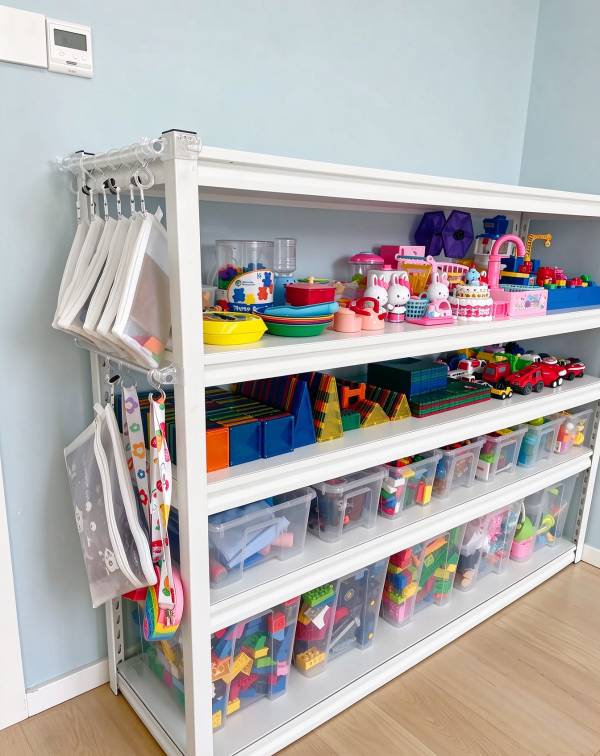
The best toy storage systems combine several methods. Open shelves are great for display and daily use, while hanging bags are perfect for flat items and small pieces.
A combined system allows you to:
Store frequently used toys at child height
Keep flat items in hanging pockets
Hide small parts in closed boxes
Save floor space
Maintain a tidy appearance
This is especially useful in small homes where every corner matters.
Conclusion
Smart toy storage is not about buying the largest cabinet—it is about creating a system that fits your child’s daily play habits. Use hanging organizers for flat items, separate boxes for small toys, vertical sections for magnetic pieces, and different box sizes for flexible storage.
When toys are easy to see and easy to put away, children are more likely to stay organized. These simple changes can help make your home cleaner, calmer, and more enjoyable for the whole family.
Leave a Comment